
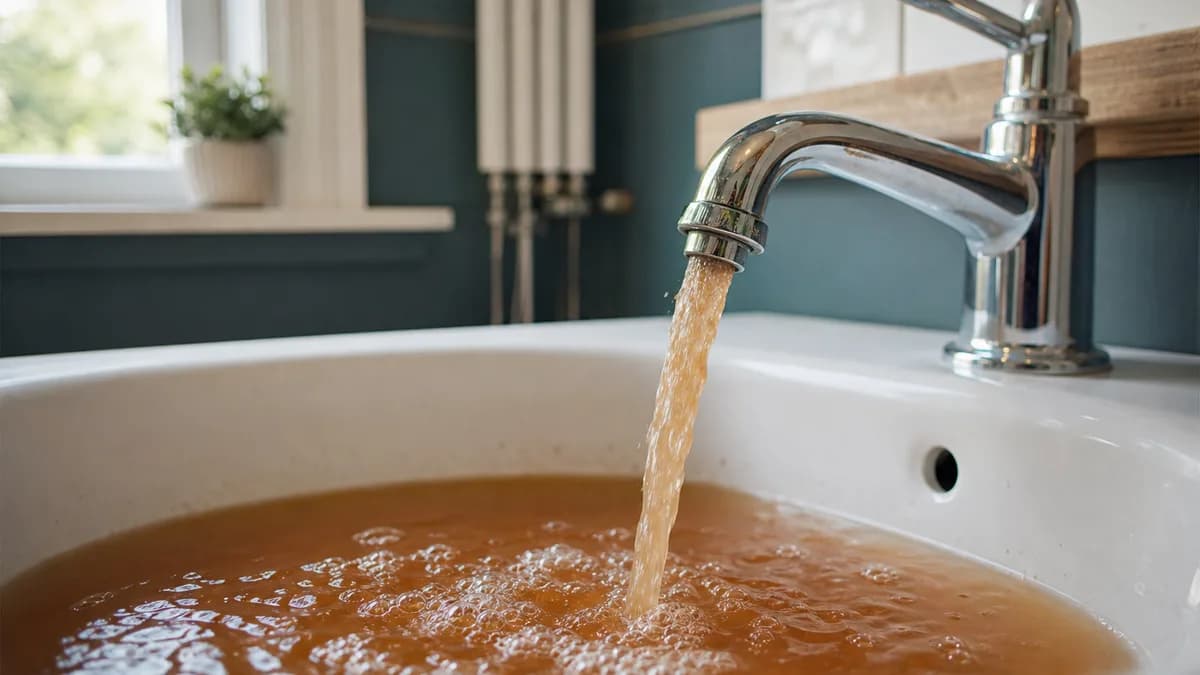
Rust-Coloured Tap Water: Causes and When to Call a Plumber
Published by PHD24 · UK plumbing, heating and drainage guidance
Orange or brown water may come from disturbed mains sediment, corrosion in private pipework or a hot-water component. The pattern helps locate the source.
Compare whole-life suitability rather than a headline feature or price. Capacity, compatibility, access, maintenance, safety and the condition of the existing services can all change the sensible choice.
Assess the whole installation
Tap faults are usually identified by where water appears: from the spout when closed, around the handle, beneath the body or at a flexible connection. Each location points to a different seal, cartridge, joint or fitting.
Narrow down the source
- Check whether hot, cold or both supplies are affected. Protect the finish, identify the exact part and restore water slowly. A careful test above and below the fitting is part of the repair.
- Ask neighbours if they see the same change.
- Run one cold kitchen tap briefly and observe whether it clears.
- Check the water company's incident page for local work. Stop repeated flushing if the water level rises. Separate an inlet or cistern fault from a blockage, and check nearby fixtures for signs that the branch drain is also affected.
- Avoid drinking water that looks, smells or tastes abnormal until advice is obtained. A trap needs an intact water seal and a clear, correctly ventilated waste route. Refilling a dry trap may stop an occasional smell, but a recurring odour needs diagnosis.
A practical comparison process
- Confirm that the hot and cold supplies can be isolated without forcing old valves.
- Identify the tap make, handle fixing and cartridge or washer arrangement before ordering parts.
- Plug the waste so small screws cannot fall into the trap and protect decorative finishes from tools.
- Reassemble in the correct order and avoid overtightening seals or ceramic components.
- Restore water slowly and check above and below the worktop for seepage.
Common mistakes to avoid
- Overtightening flexible hoses, cartridges or compression joints.
- Checking only the spout and missing a slow leak inside the cabinet.
- Assuming every drip is caused by a replaceable rubber washer.
- Forcing a seized isolation valve immediately before dismantling the tap.
UK context and safety
Do not assume discoloration is harmless. Contact the water supplier first if the mains is affected; use a plumber when the issue is confined to the property or hot-water system.
Isolate both supplies and verify that flow has stopped before dismantling a mixer tap. Take extra care with hot-water supplies and boiling-water taps. If safe isolation is unavailable or an old valve begins to leak, stop and arrange a controlled repair rather than forcing it.
Prevention and ongoing care
Build maintenance and future repair access into the choice rather than treating them as afterthoughts.
- Remove limescale with a product and method suitable for the finish.
- Inspect flexible connectors and cabinet bases for early signs of seepage.
- Keep product details so the correct cartridge can be sourced later.
- Repair drips before mineral deposits damage seats and finishes further.
When to call PHD24
PHD24 can investigate internal pipe corrosion and hot-water faults.
PHD24 can identify the leak point, assess whether parts remain available and compare repair with replacement. The visit can also address weak isolation valves or damaged connections that would make a simple tap repair unreliable.
Call promptly if water cannot be isolated, wastewater is entering the property, heat or hot water has failed in vulnerable circumstances, or the fault involves gas, wet electrics or a risk to the building. For a non-urgent visit, photographs and a short history help PHD24 plan the right first attendance.
Frequently asked questions
Can I deal with this myself?
A like-for-like washer or cartridge repair may be manageable when both supplies isolate correctly and the part is identified. Stop if valves seize or concealed connections leak.
What information helps before an engineer visits?
Photograph the tap and leak point, identify the make if possible and report whether the hot and cold supplies isolate correctly.
Does American plumbing advice apply directly in the UK?
Not without checking it carefully. UK terminology, Building Regulations, water-company responsibilities, Gas Safe requirements and common system designs differ from US practice. Follow current guidance for the relevant UK nation and the equipment actually installed.