
A Cleaner Dishwasher: A Practical Cleaning Routine
Published by PHD24 · UK plumbing, heating and drainage guidance
A dishwasher needs clean filters, free-moving spray arms and an unobstructed waste connection to wash and drain properly.
Understanding the system shows which observations matter and where DIY should stop. The aim is not to turn every homeowner into an engineer, but to help you describe the installation clearly and make a proportionate next decision.
How to use this information
Plumbed appliances combine water, drainage and electricity, and food-waste units add moving parts. A safe check separates a plumbing restriction from an appliance fault before any cover is removed.
A safe cleaning routine
- Switch off the appliance and empty it. Use only the user-service procedure in the manual and isolate power first. Internal appliance repair may require a different specialist.
- Remove and wash the filter according to the manual.
- Clear food from spray-arm holes without enlarging them. Remove the material at source and put it in the appropriate bin or recycling route. Forcing unsuitable waste farther into the pipe can turn a local restriction into a deeper blockage.
- Wipe door seals and the lower edge where residue collects.
- Run the manufacturer's recommended cleaning cycle and check for leaks. Dry the area first, then check it again under normal operating conditions. The timing and first point of fresh moisture are more useful than the final spread of the stain.
How to assess your own system
- Clean only removable user-service parts and never reach into a waste-disposal chamber.
- Run a supervised test after reassembly and stop immediately if leakage, noise or overheating returns.
- Stop the appliance, isolate power and close its water valve if leakage is continuing.
- Check the manual for user-accessible filters, reset steps and cleaning restrictions.
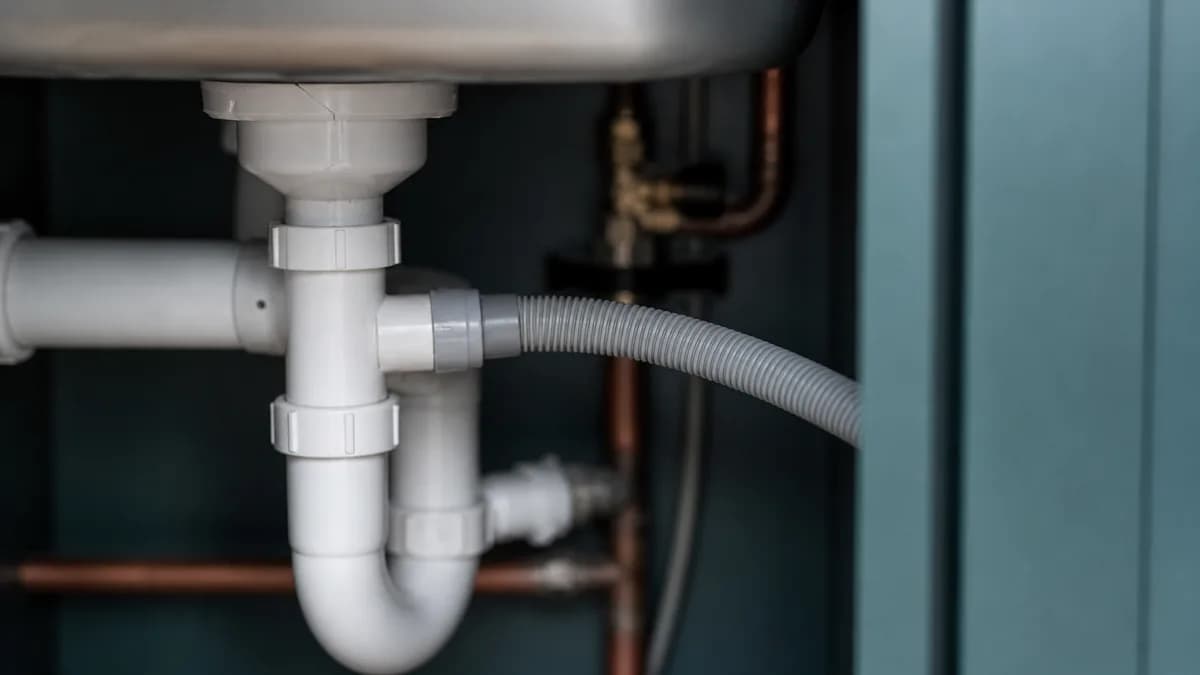
- Inspect hoses and the surrounding cabinet for kinks, bulges, loose connections and fresh water.
Common mistakes to avoid
- Mixing chemical drain cleaner with mechanical clearing or appliance cleaning.
- Pushing an appliance back against a kinked or strained hose.
- Assuming a blocked shared trap is an internal appliance failure.
- Working on an appliance that is still connected to power.
UK context and safety
Do not mix cleaning products, and avoid dismantling fixed plumbing or electrical parts. Keep the waste hose in the route specified by the manufacturer.
Water and mains electricity are present together. Isolate the appliance using its proper control and do not rely only on an on-screen off button. Internal electrical or mechanical repairs belong with an appliance engineer or electrician; a plumber should handle the connected supply and waste where appropriate.
Prevention and ongoing care
A little planned care usually provides more value than repeated emergency intervention.
- Check connections after the appliance has been moved for flooring or maintenance.
- Investigate new noises, odours and slow discharge before a complete blockage develops.
- Clean accessible filters at the interval in the manufacturer's instructions.
- Keep hoses supported, unkinked and protected from sharp cabinet edges.
When to call PHD24
If the machine leaks, smells after cleaning or will not drain, PHD24 can check the water and waste connections.
PHD24 can test the accessible water supply, valves, traps and waste connections. If the fault lies inside the appliance, the evidence from that check helps the correct appliance specialist avoid repeating plumbing work.
Call promptly if water cannot be isolated, wastewater is entering the property, heat or hot water has failed in vulnerable circumstances, or the fault involves gas, wet electrics or a risk to the building. For a non-urgent visit, photographs and a short history help PHD24 plan the right first attendance.
Frequently asked questions
Can I deal with this myself?
Stay within the user-maintenance steps in the manual and isolate power. Internal appliance, electrical or moving-part repairs need the relevant specialist.
What information helps before an engineer visits?
Provide the make, model, fault code, point in the cycle, hose arrangement and whether the connected sink or trap also drains slowly.
Does American plumbing advice apply directly in the UK?
Not without checking it carefully. UK terminology, Building Regulations, water-company responsibilities, Gas Safe requirements and common system designs differ from US practice. Follow current guidance for the relevant UK nation and the equipment actually installed.