
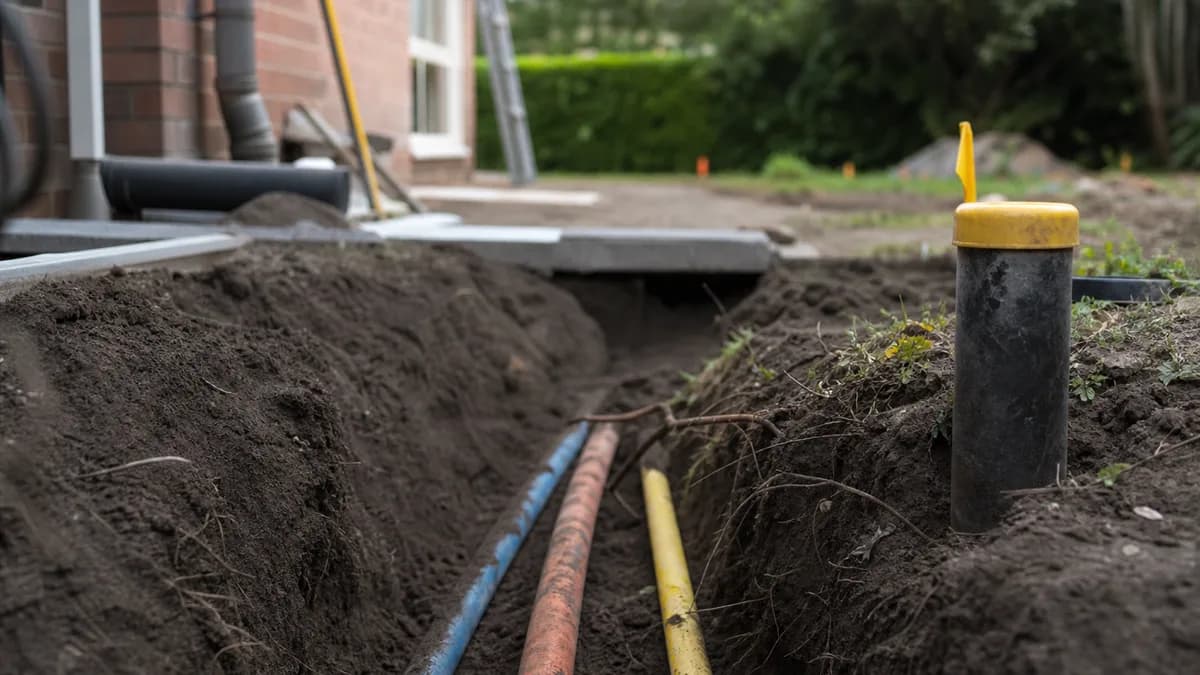
Before You Excavate: Locating Buried Pipes and Cables
Published by PHD24 · UK plumbing, heating and drainage guidance
The US 811 number does not apply in the UK. Before digging, obtain utility records, inspect the site and use appropriate locating methods.
Understanding the system shows which observations matter and where DIY should stop. The aim is not to turn every homeowner into an engineer, but to help you describe the installation clearly and make a proportionate next decision.
How to use this information
External water and drainage systems are exposed to frost, soil movement, roots, debris and heavy rainfall. Their condition is often easiest to assess during dry weather, before access becomes difficult or a storm turns a partial restriction into flooding.
The UK approach
- Request plans from utility owners or a recognised search service. Plan the safe access and stopping point before work begins. Escalate the task if it approaches buried utilities, unstable ground, height or contaminated drainage.
- Check private records for drains, water, heating oil and site services. Write down the date, location, observation and action taken. A concise record helps the next inspection distinguish a new change from an established condition.
- Use a cable-and-pipe locator operated by a competent person.
- Mark routes and use safe digging methods with trial holes.
- Stop if an unidentified service or warning tape is found. Consider frost, rain, buried services and safe access before acting. Outdoor conditions can make a normal plumbing task materially more hazardous.
How to assess your own system
- Trace where runoff is intended to go and whether an overflow would affect buildings or neighbouring land.
- Use a competent contractor where excavation, work at height, confined access or buried utilities are involved.
- Relate the symptom to rainfall, freezing weather, irrigation use and water-meter movement.
- Inspect accessible taps, gullies, gutters and discharge points without climbing or entering chambers unsafely.
- Obtain service records and use appropriate locating methods before disturbing the ground.
Common mistakes to avoid
- Discharging pumped or irrigation water where it causes nuisance, erosion or re-entry.
- Assuming service plans show every private, abandoned or shallow pipe and cable.
- Using mechanical excavation close to a suspected service without safe locating and trial holes.
- Working from an unsecured ladder to clear gutters or high downpipes.
UK context and safety
Plans are indicative and may omit private or abandoned services. HSE safe-digging guidance should inform the method.
Excavation can strike gas, electricity, water and communication services. HSE guidance describes three essentials: plan the work, locate and identify buried services, and excavate safely. Do not rely on depth assumptions, warning tape or a single drawing. Work at height and contaminated drainage also need their own controls.
Prevention and ongoing care
A little planned care usually provides more value than repeated emergency intervention.
- Clear leaves from accessible gratings and check gutters from a safe position before wet seasons.
- Keep a simple plan of private drains, water supplies, irrigation and known buried services.
- Investigate persistent wet ground before it undermines paving or reaches the building.
- Plan trees and deep-rooted planting with drainage and service routes in mind.
Useful UK guidance
When to call PHD24
PHD24 can help locate private water and drainage routes within a wider safe-dig plan.
PHD24 can investigate private water and drainage routes, external leaks and accessible drainage faults. Utility owners, arborists, electricians, roof-access specialists or civil contractors may also be needed where the evidence extends beyond plumbing.
Call promptly if water cannot be isolated, wastewater is entering the property, heat or hot water has failed in vulnerable circumstances, or the fault involves gas, wet electrics or a risk to the building. For a non-urgent visit, photographs and a short history help PHD24 plan the right first attendance.
Frequently asked questions
Can I deal with this myself?
Ground-level observation and simple maintenance may be suitable. Excavation, buried services, work at height and contaminated drainage require stronger controls.
What information helps before an engineer visits?
Note rainfall, frost, irrigation use, water-meter movement, odour, location and any available service or drainage plan.
Does American plumbing advice apply directly in the UK?
Not without checking it carefully. UK terminology, Building Regulations, water-company responsibilities, Gas Safe requirements and common system designs differ from US practice. Follow current guidance for the relevant UK nation and the equipment actually installed.